
What is an oral cavity tumor?
The oral cavity is the area of the mouth that includes the tongue, cheeks, palate, jaw, and lips. Tumors (masses) can grow in any of these areas and they can be benign (non-cancerous) or malignant (cancerous). Common risk factors for developing oral cancer are smoking, heavy alcohol use, ill-fitting dentures, betel nut chewing, and repeated trauma from a tooth.

Evaluation through biopsy and imaging is the first step before treatment planning. Surgery aims to remove tumors completely while preserving as much function (speech, swallowing, and appearance) as possible.
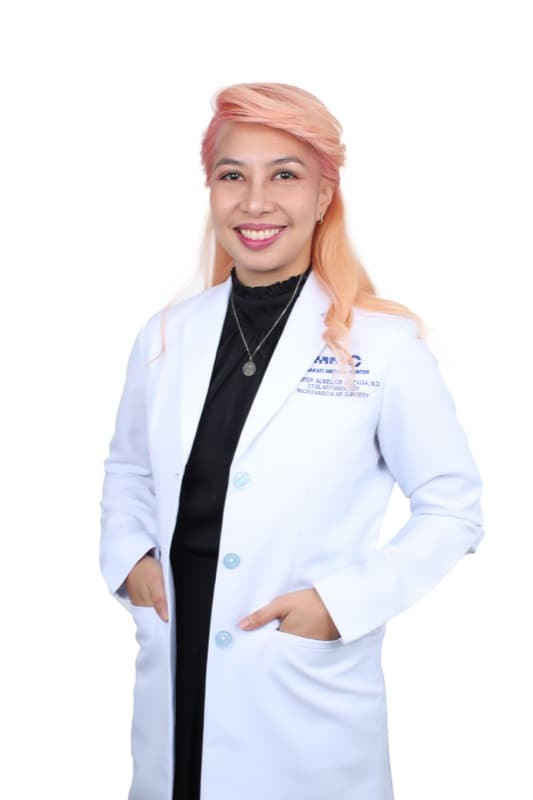
Medically reviewed by Jennifer Almelor-Alzaga, MD, board-certified Otolaryngologist (PSO-HNS), fellowship-trained in Head & Neck Oncologic Surgery and Microvascular Reconstruction. Last reviewed: October 3, 2026.
Warning signs of oral cancer
See an ENT-Head and Neck Specialist immediately if:
- ✓A mouth sore or ulcer does not heal within 2–3 weeks
- ✓A lump or thickening in the tongue, cheek, palate, jaw, floor of the mouth, or lips
- ✓A white or red patch in the mouth that persists
- ✓Persistent or recurrent pain, numbness, or bleeding in the mouth
- ✓Difficulty chewing, swallowing, or moving the tongue
- ✓A neck lump alongside any of the above
What to expect
At a Glance
- Main treatment
- Surgery
- Anesthesia
- General
- Where
- Philippine General HospitalManila Doctors HospitalMakati Medical Center
Risks & What to Discuss with Your Surgeon
The risks of oral cavity surgery depend on the tumor type, size, and location and whether reconstruction is needed. Surgery for oral cancer is usually more extensive than for benign (non-cancerous) tumors. Effects on speech, swallowing, and appearance are carefully weighed against the need to remove the tumor completely, which is why reconstruction and rehabilitation are part of modern treatment. An experienced ENT-Head and Neck Surgeon plans the operation to balance cure with quality of life.
Why choose Dr. Alzaga for oral cavity surgery
Surgery of tumors of the oral cavity is exactly the field Dr. Jennifer Almelor-Alzaga trained in. She completed a double fellowship — first in Head and Neck Surgery in Taiwan, and the second in Microvascular Reconstructive Surgery in Thailand. This means the same surgeon can both remove the tumor and rebuild the area to restore form and function. This combination is uncommon in the Philippines.

Jennifer Almelor-Alzaga, MD, FPSOHNS
Board-certified Otolaryngologist–Head & Neck Surgeon. Fellowship-trained in Head & Neck Oncologic Surgery (Taiwan) and Microvascular Reconstruction (Thailand).
Ready to book a consultation?
Choose your preferred clinic location below. Appointments are required — no walk-ins.
Cash or bank transfer accepted. We do not accept HMOs, GCash, or credit cards. Appointments are strictly required. No walk-ins.
Frequently Asked Questions
Related procedures
This page is for general information only and does not constitute medical advice, diagnosis, or a treatment plan. Individual cases vary — always consult a qualified medical professional for advice specific to your situation. Dr. Jennifer Almelor-Alzaga, MD is available for consultations at Makati Medical Center and Olistico Health Manila.